
Shopping for a harness, cuffs or a hood, you'll see two very different price points: real leather and PU (polyurethane, often sold as "vegan" or "faux" leather). They can look similar in photos, but they behave very differently once you wear them – and for restraints, the difference matters for safety as well as comfort.
What's the difference?
- Full-grain leather is the top layer of the hide with the natural grain left intact. It's the strongest, longest-lasting grade of leather. All our gear is made from full-grain cowhide.
- "Genuine leather" on a label usually means a lower grade: the split layers under the top grain, often sanded and coated. It's real leather, but weaker than full-grain.
- PU leather is a plastic coating on a fabric backing. It contains no animal hide.
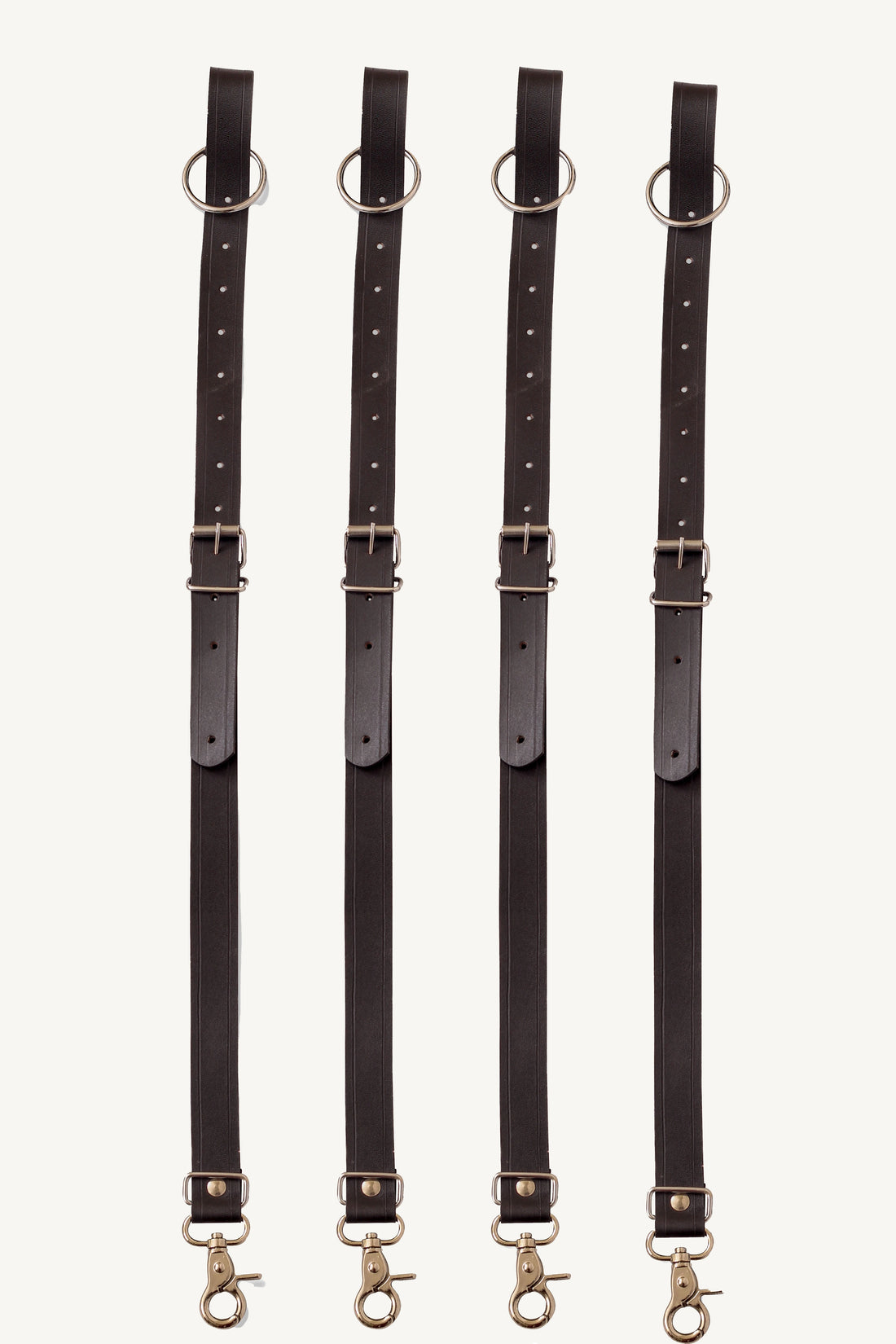
Side-by-side comparison
| Full-grain leather | PU leather | |
|---|---|---|
| Strength | Very high; holds stitching and rivets under load | Low to medium; can tear at stitch holes |
| Lifespan | Many years with care | Often 1–2 years before peeling or cracking |
| Comfort | Breathes, softens and moulds to your body | Doesn't breathe; can feel sticky and hot |
| Ageing | Improves – develops a patina | Flakes and cracks |
| Smell | Rich natural leather scent | Chemical or plastic smell |
| Care | Clean and condition | Wipe only; can't be restored |
| Price | Higher upfront | Lower upfront, replaced more often |
Why it matters for bondage gear
Safety under load. Cuffs, suspension cuffs, swings and sleepsacks take real force. Full-grain leather holds its shape and keeps stitching and rivets secure. PU's coating can split at stress points without warning – not something you want on suspension cuffs or a sex swing.
Comfort over long sessions. Real leather breathes and absorbs some moisture, so a hood or sleepsack stays far more comfortable than a plastic-coated one.
Value over time. A PU harness may cost less on day one, but if you replace it every year, full-grain works out cheaper – and looks better every year you own it.
How to tell real leather from PU
- Look at the edges. Real leather shows fibrous, suede-like edges (often burnished or painted). PU shows a fabric layer under a plastic skin.
- Check the grain. Full-grain has small, irregular pores and natural marks. PU has a uniform, repeating pattern.
- Smell it. Leather smells earthy; PU smells of plastic.
- Feel it warm up. Leather warms to your touch and feels slightly soft; PU stays cool and slick.
- Read the label. "Full-grain" is the top grade. "Genuine leather", "bonded leather" and "PU" are lower grades or not leather at all.
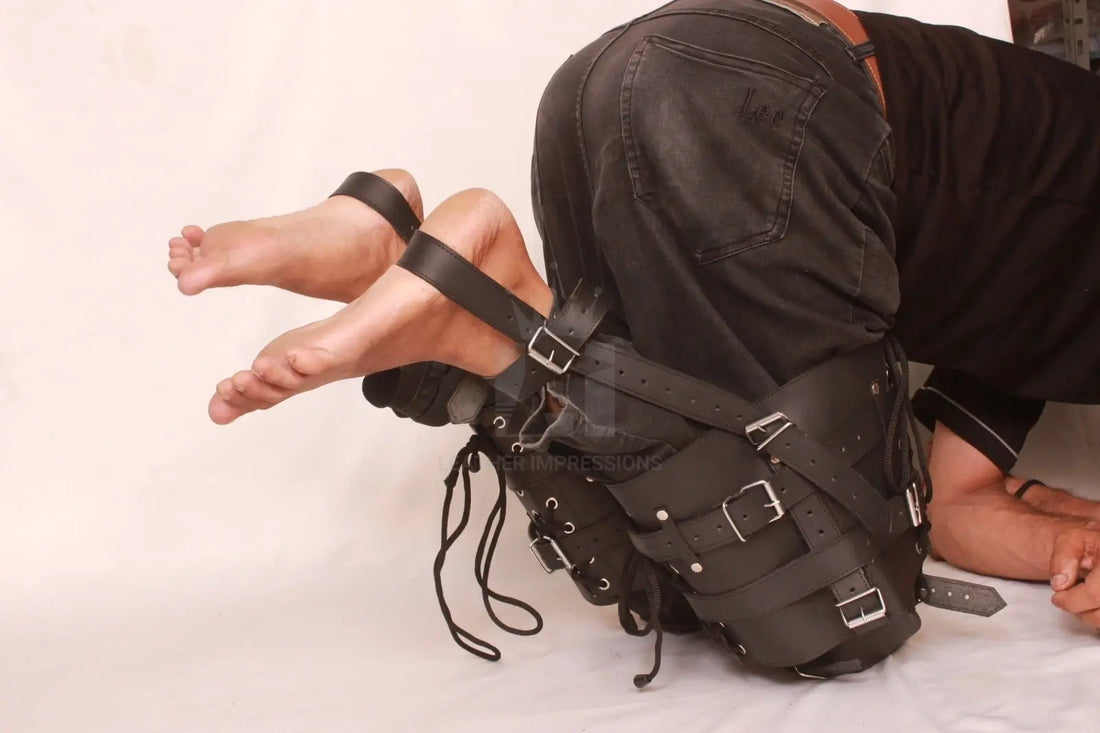
When PU might make sense
If you don't use animal products, or you want a cheap costume piece for a single event, PU is an option. For gear you'll wear regularly, or anything that restrains or supports body weight, full-grain leather is the safer, longer-lasting choice.
Frequently asked questions
Is full-grain leather better than top-grain?
Yes. Top-grain has the surface sanded off, which makes it thinner and less durable. Full-grain keeps the strongest outer layer intact.
Does real leather need special care?
Just a wipe after use and a conditioner every few months. See our leather care guide.
Is your gear really full-grain?
Yes. Every item is handmade from full-grain cowhide in our own workshop and covered by a 1-year warranty.
See the difference for yourself: browse our full-grain leather harnesses or bondage restraints.


